The Power Mac is dead: a frustrated farewell.
In 2026 we call desktop upgradeable Macs "Mac Pros", but my lived experience as a prosumer is older, so Power Mac is more fitting to me.
Mac Pros, or Macs (for) Pros, have been discontinued. Was this a failure of the Power Mac, or its audience? No. It's Apple's fault. Here's why.
When Power Macs were introduced, they were form married to function. The function was:
When NeXT and its designers were acquired by Apple, a whole big pile of sexy form makers were brought along and we got to enjoy some of the most beautiful, fun and inviting functional computers ever made.
Apple's pro models could be more expensive than its consumer models, but not always. Their size and ability to be expanded worked into the higher cost, while mobile added a higher cost from miniaturization. But that didn't make them unafordable. You could get a Power Mac in the early 2000s for $1800 CAD. Today that barely reaches a base model iMac, and is only slightly higher than a MacBook Air.
In the early 2000s when Apple was still thinking differently and saving itself from extinction, they were deeply connected to their customers, their needs, their value propositions. You could write Apple Canada a nice letter about how much you loved your iMac and they would send you a staff signed gratitude letter and a free T-shirt. True story! Back then Apple was busy EARNING and IN SERVICE TO customers, and it showed:
You can't see these goals in 2026 Apple. Instead what they show is:
Apple didn't pioneer these poisons, but it sure has been complicit. They've forgotten who they are. The money was too good, and they got stupid.
It was around 2010 that I feel Apple had become big, too big, and it started removing expansion slots from its consumer devices to again leave its Apple II approach of expandable desktops and fall back to a 1984 Mac mindset (and with fewer ports than that Mac had). Apple's success with iPhones and shareholder joys taught it that closed systems force people to buy, and re-buy, since they foster a continuous hunger for "enough" that never quite comes. When users have access to longer lasting upgradeable systems that are so pretty as to be personable, they want to hold onto them forever and grow alongside them. I know this because I have 40 years of Mac design philosophy in my home, and the older systems satisfy me more than the newer ones.
And thus began the new glued kiosk+subscriptions Apple. Instead of the computer FOR the rest of us, they moved to produce funnels to get subscriptions FROM us. iTunes' OWN your music/movies, is now Music's RENT your music/movies.
They've even played games with their App Stores. What is offered as a convenience is actually a tool of forced obsolescence:
Bonus power move:
Now back to the Power Mac and how that entire shift of power and culture has caused its death.
Once Macs became super profitable as closed spec + continuous services charges credit card terminals, offering an expandable pretty desktop of personal power became a threat to fiscal quarters. Apple started to neglect its Power Mac products to prioritize skrilla ovah usah powah. Shareholders became their users, and these users seek their satisfaction in hype and buy cycles per quarter to per month, and not after 3-5 years of a Power Mac upgrade cycle. In the switching of masters, growth culture became gains culture. The two Gs aren't the same: the difference is a power and focus shift from value receiving to value taking.
Given the lower short-term revenue of expandable systems, the Power Macs therefore had to go UP in price to buffer the continuous gains for the times in-between of upgrade cycles. Their price went from $1800 in the early 2000s to $3000 to $6000 to $9000 CAD in recent years. They've even tried to sell us $1000 casters. These prices all became so ridiculous and low value that few wanted to touch them anymore (myself included), and they ran to Windows/Linux PCs or closed consumer Macs.
Apple sought to further monetize the prosumers running to more affordable Macs with products like the iMac Pro and Mac Studio.
Apple's M* APUs were introduced and were shown to be super powerful; reaching into spaces held by Power Macs. RAM and storage were non-upgradeable, and Apple aggressively monetized that trap. Users have since been forced to pay ridiculous prices for RAM and storage bumps (compared to avg market prices) to try to future-proof systems instead of the less kidney risking pay-as-you-go model of the past. This anxiety pressure of "what if? I only have this one decision window" sat on top of "Apple now takes all your money instead of parts vendors", and profits soared.
There's been a few additional Apple-benefiting mind games that have emerged in the process:
Tout ça pour dire, Apple hand-wringers knew what they were doing.
And they did it no matter the harms to their prosumer customers because in a shareholders focused culture, it's Good BusinessTM.
Whatever. I won't buy new Apple products designed and managed in this way. I get much more value from older Apple systems (like Power Mac G4), or Windows/Linux PCs or laptops that I can build from parts and upgrade.
Speaking of older Power Macs, here are my three lovelies that I've had the privilege of enjoying (G5) or am still enjoying (2xG4s):
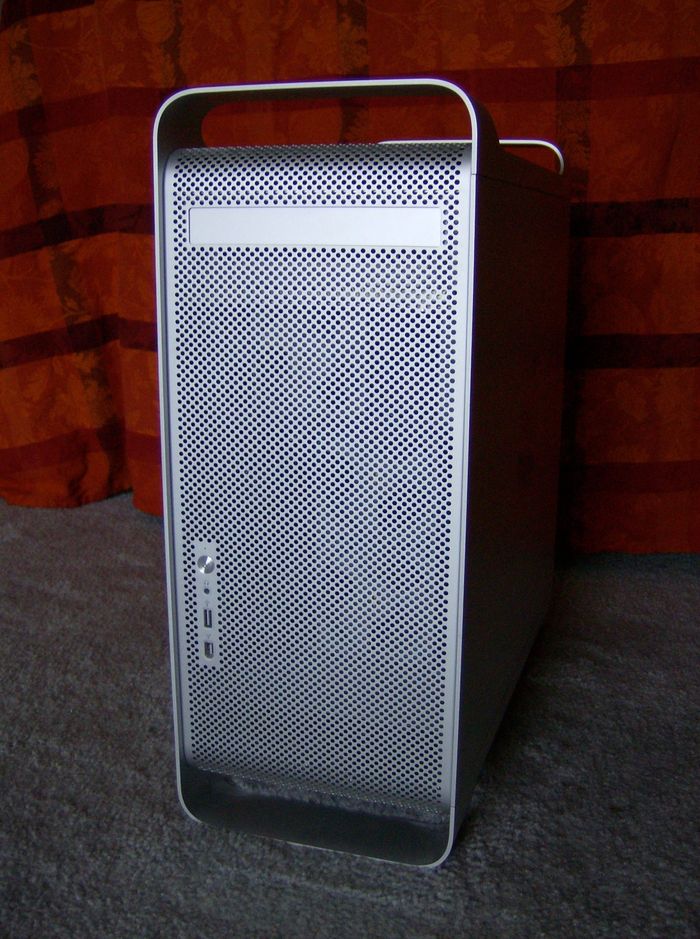
Power Mac Dual Core G5 (sold)
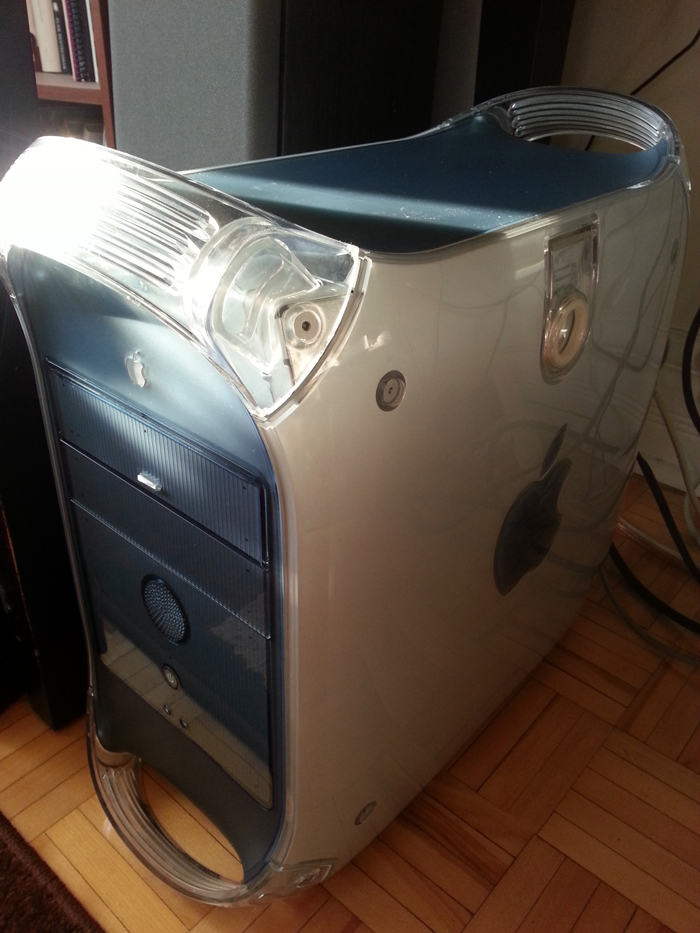
Power Mac G4

Power Mac Dual G4 MDD
By Ariella on Powermac G4 with Mac OS X 10.5.8 and Adobe GoLive CS